
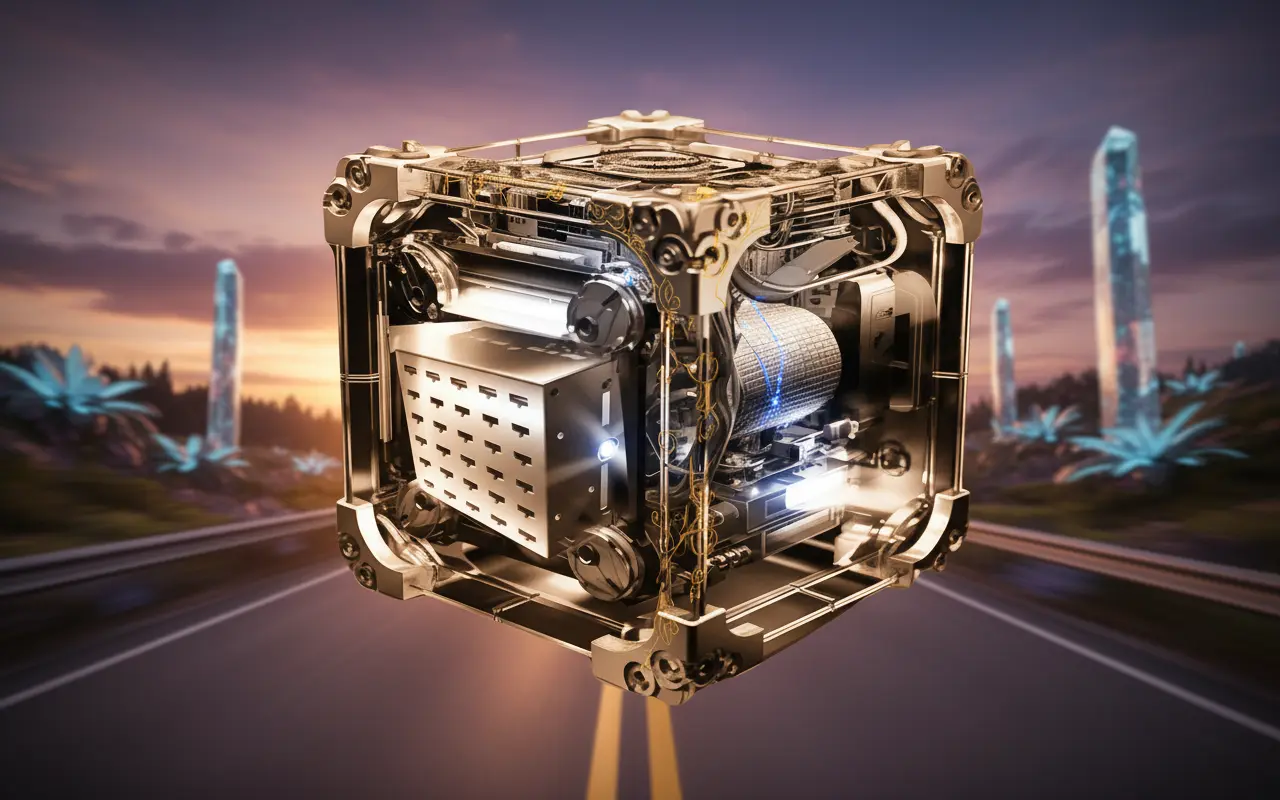
Imagine a future where you could plunge deeper into the cosmos, racing past Mars, all without ever worrying if you packed enough fuel. Thanks to RocketStar’s FireStar™ Drive, this wild science fiction dream may soon be a reality—and space travel as we know it could be turned upside down.
A New Hope for Space Exploration
RocketStar’s latest innovation, the FireStar™ Drive, is setting the stage for a revolution in space propulsion. Unlike the clunky, fuel-hungry rockets of old that burn through resources faster than your laptop battery during a Zoom call, this new system draws its energy straight from that blazing fusion reactor up in the sky—the Sun itself. What’s the secret sauce? A propulsion system that promises to upgrade our exploration of the universe forever.
The Heart of the FireStar™: Plasma, Water, and a Hint of Cosmic Alchemy
At the core of the FireStar™ Drive is an advanced pulsed plasma propulsion technology. Here’s how it works:
- It uses water (yes, plain H₂O!) to accelerate protons at incredibly high speeds.
- Once these protons hit the desired velocity, they collide with boron atoms.
- This fusion produces energy with a nuclear reaction.
- The result? A process that’s not just a bit better, but twenty times more efficient than traditional propulsion methods.
This isn’t just an evolutionary step—it’s a transformation. With such efficiency, spacecraft could embark on longer missions, traveling farther with no need for endless stops to refuel. Think of it as the cosmic equivalent of a car that gets 1,000 miles to the gallon—and then some.
Clean and Infinite: The Aneutronic Fusion Leap
The true breakthrough of the FireStar™ Drive isn’t just in how it works, but how cleanly it works. The system relies on aneutronic nuclear fusion: a process that sidesteps the dangerous radiation plaguing traditional nuclear power. Inspired by the very furnace at the heart of our Sun, this drive could provide infinite, accessible energy for interstellar journeys. Solar power, harnessed and deployed in orbit, becomes nearly limitless—ready to support generations of explorers without the environmental baggage of fossil fuels.
Nuclear engineering professor Adam Hecht highlights just how radical this is: not only does the FireStar™ Drive push the boundaries of current technology, but it signals the dawn of a new age in green propulsion. With its water-based fuel and nuclear fusion, RocketStar’s system is a much-needed alternative to the polluting chemical engines still in use today. It’s a fresh draft of the rulebook for modern space travel.
From Napkin Sketches to Orbit: What’s Next for FireStar™?
Where did this spark of genius originate? Like all iconic innovations, it began scribbled on a napkin at a conference, the lovechild of RocketStar CEO Chris Craddock and CTO Wes Faler. With boost from the US Air Force’s AFWERX initiative, what started as a visionary concept soon took on real form. Now, the FireStar™ Drive is gearing up for real-world testing—a leap from dream to deliverable reality.
Initial tests will fire up at the Georgia Institute of Technology’s High-Power Electric Propulsion Laboratory. More eyes will watch as Rogue Space Systems’ Barry-2 satellite carries the drive on a test flight scheduled for February 2025. These trials are crucial for answering tough questions:
- How much fuel will it actually consume?
- How will the motor perform under the harsh realities of space?
- What are the implications and realities of fusion in orbit?
The answers will determine whether FireStar™ is truly ready to overhaul how we travel beyond our planet.
Rewriting the Future of Space Travel (No Pressure)
Should the tests deliver good news, FireStar™ Drive could slash travel times to Mars and distant worlds—enabling quicker, more frequent forays across the solar system, and perhaps, eventually, toward nearby stars. The potential isn’t merely about traveling faster. It’s about possibility: a redefinition of where, how, and how often we can go. A future where humans zip about the cosmos at unprecedented speeds and efficiency could be just around the corner, all powered by a cube of technology unlike anything Earth has ever seen.
So, as RocketStar pitches us into a new chapter of cosmic exploration, one thing’s for sure: the journey from napkin to spaceship might be short, but the path ahead is endless. Next stop: new planets—and maybe, one day, other suns.

Iveta is an aspiring journalist with a passion for storytelling and a deep love for coffee. Always curious and creative, she dreams of sharing stories that inspire, inform, and connect people around the world


