
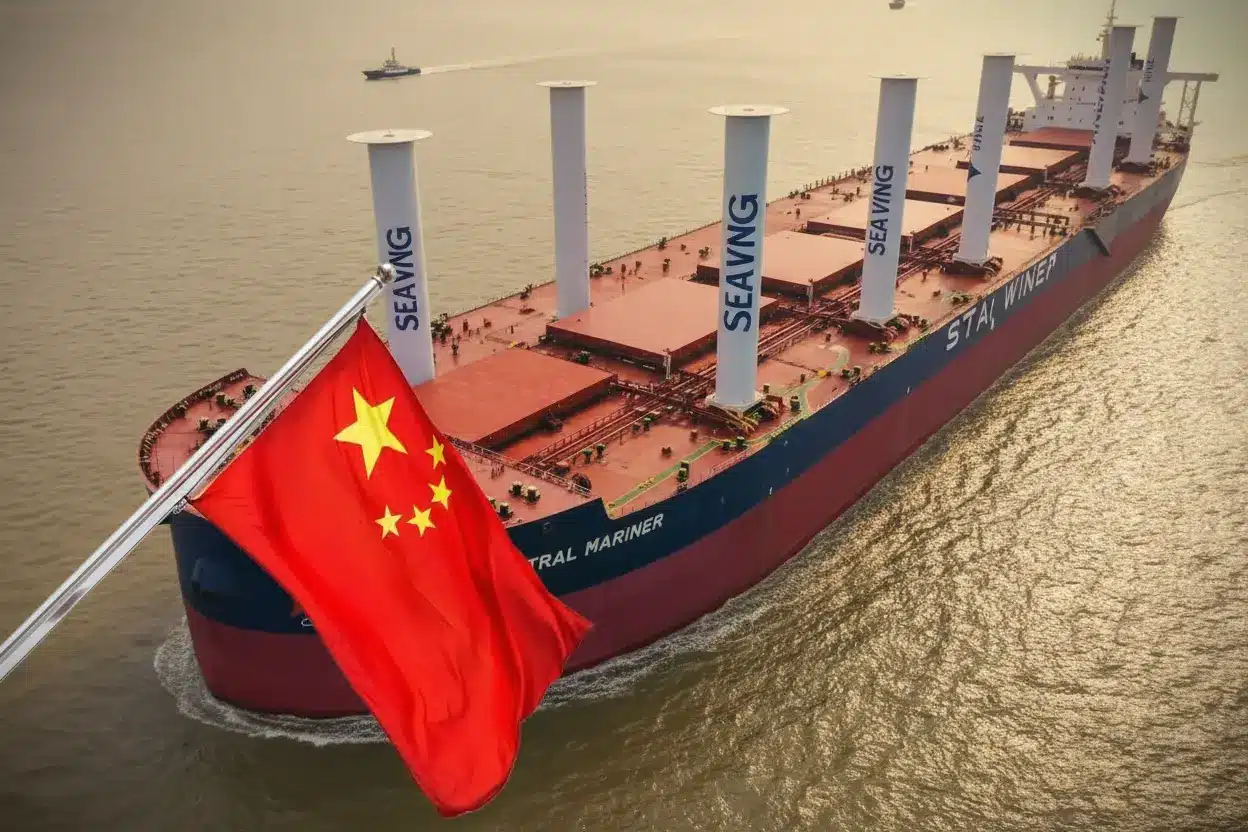
What if the secret to a greener shipping future was not hidden in futuristic, nuclear-powered engines, nor in distant sci-fi tech, but in a twist on good old wind? Enter China’s ancient maritime wisdom—reimagined and super-sized for the 21st century, and ready to save thousands of tons of fuel.
Sohar Max: From Bulk Carrier Giant to Green Pioneer
Back in 2012, the Sohar Max launched onto the high seas as one of the world’s largest mineral carriers, charting its course under the Valemax name, and instantly joining the ranks of oceanic colossi. Fast-forward more than a decade, and this maritime titan has turned a new, decidedly eco-friendly page thanks to a remarkable wind-assisted propulsion upgrade. This isn’t just a minor retrofit—it’s a leap forward for both energy efficiency and environmental impact.
Reinventing Sails in the Age of Mega Ships
In October 2024, the Sohar Max received a head-turning makeover at the COSCO Zhoushan shipyard in China: five gigantic, rotating sails, each a towering 35 meters high and 5 meters wide. Designed by the British firm Anemoi Marine Technologies, these modern marvels of engineering are true wind catchers, channeling Mother Nature’s power to propel the ship forward. The result? A sharp cut in dependence on fossil fuel and a solid contribution to trimming down CO2 emissions.
But wait, there’s more than just slapping on big, spinning columns and calling it a day. What truly sets this project apart is how Anemoi integrated a state-of-the-art deployment and retraction system. With this innovation, the sails can be folded vertically when necessary—a nifty feature that means cargo loading operations don’t end up in knots. This compatibility with modern logistics is a game-changer, marrying old-world wind power with the no-compromises efficiency demands of present-day shipping.
Crunching the (Green) Numbers
The impact? According to estimates, the Sohar Max’s rotary sails could slash annual fuel consumption by up to 6%. On paper, it might sound like a modest percentage—but in the world of shipping, that equates to a substantial cost saving for the operator. Even more impressive: the expected reduction in carbon emissions is around 3,000 tons per year. If numbers could smile, these would be beaming! This achievement underlines the urgent importance of embracing sustainable solutions in maritime transport.
- Annual fuel consumption reduction: up to 6%
- Annual CO2 emissions cut: around 3,000 tons
- Five rotary sails: 35m tall, 5m in diameter each
Following the winged transformation, Sohar Max embarked on a trial voyage to Tubarão, Brazil. Real-world tests like these—and the many journeys to come—are essential for evaluating and fine-tuning the performance of the rotary sail system under actual ocean conditions.
A Collaborative Push Toward Greener Seas
If this all sounds like a feat only a united crew could pull off, you’d be right. The project is the fruit of close cooperation between Brazilian mining giant Vale S.A., Sohar Max’s owner, Omani firm Asyad, and the brains at Anemoi Marine Technologies. This mix of expertise highlights a shared commitment to innovation and fleet modernization—not just to get a gold star for green efforts, but to meet tough international standards like CII and EEDI/EEXI for emission reductions.
Rotary sails aren’t just for the Sohar Max. Among shipowners aiming for carbon neutrality, these compact yet mighty sails are rising stars. They pack a real punch, letting vessels meet ever-tightening energy and emissions demands. The Sohar Max’s installation represents a serious step forward in the industry’s global push for greener, cleaner operations.
Looking Ahead: Changing How the World Moves
With the Sohar Max as a bold case study, shipping and maritime transport are steering into an era where technology and innovation do more than boost efficiency—they actively reshape environmental impact. If the sails’ trial performances prove successful, we might soon witness this technology rolled out on a much larger scale, blowing a fresh wind of change through global transport.
As we watch this giant’s journey, one thing is clear: harnessing the power of wind, with a dash of human ingenuity, could once again redefine how we move the world’s goods. Maybe it’s time we all took a second look at Grandma’s old stories about sailing ships, after all.

Iveta is an aspiring journalist with a passion for storytelling and a deep love for coffee. Always curious and creative, she dreams of sharing stories that inspire, inform, and connect people around the world


