
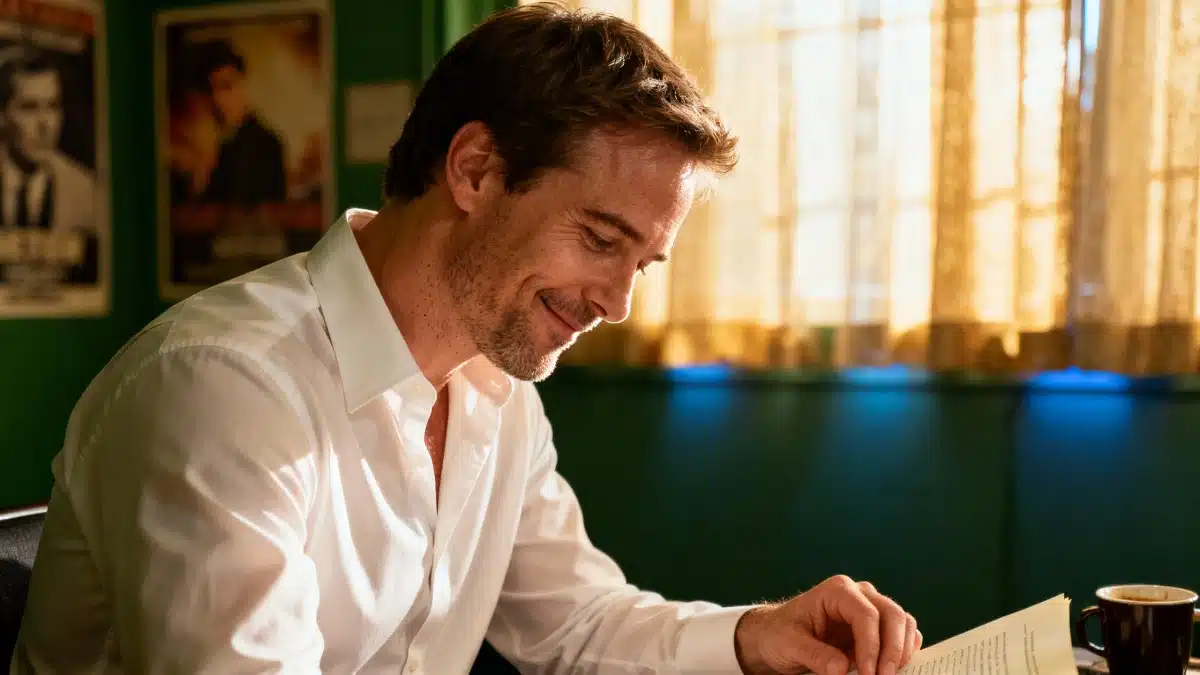
It began with little more than a shadow in the background—a figure easy to miss, an ambition quiet but unyielding. Over years, this almost invisible presence grew into a masterful career. His name is Daniel Day-Lewis, and the path from extra to acclaimed icon is a tale of relentless precision and rare, almost intimidating, integrity.
From Blink-and-You-Miss-It to Center Stage
In 1971, a 13 or 14-year-old Daniel Day-Lewis appeared ever so briefly in the Oscar-nominated film Sunday Bloody Sunday. It was a fleeting moment, yes, but this brush with cinema set a high bar. At first, all the camera captured was a silhouette, but behind it lay a temperament taking root—one that would define decades. Ambition found its footing, almost inaudibly. Rather than fading, Day-Lewis decided to sharpen his craft. He took to the stage, trained his voice, honed his presence, and, bit by bit, returned to film armed with discipline.
Chiseling a Reputation: The 1980s and Beyond
Every early role for Day-Lewis followed a clear internal logic; nothing left to chance, nor undertaken for mere effect. His filmography grew deliberately, with each project reinforcing his distinctive path.
- Gandhi (1982) lent gravity and scale.
- The Bounty (1984) added complexity.
- My Beautiful Laundrette and A Room with a View (both 1985) revealed agility and nuance.
Theatre training honed his edge, while audiences and critics alike began to sense the promise beneath this precision. What truly defined him? Preparation, bordering on obsession: deep immersion, thorough research, never leaving character between takes, persistent discipline. On set, partners took note—this attention to detail wasn’t for show, but in service to the role. Paradoxically, his performances grew denser as his gestures grew simpler. Each detail, no matter how small, mattered more than spectacle ever could.
Oscars, Nominations, and the Art of Restraint
Day-Lewis’s discipline paid off, sealing his reputation with three Oscars for Best Actor:
- My Left Foot (1989)
- There Will Be Blood (2007)
- Lincoln (2012)
His consistency became legendary. Unlike so many, he didn’t chase awards; his craft dictated everything, prizes simply followed. The resume remained focused, uncompromising. Nominations marked the journey, from In the Name of the Father (1993) to Gangs of New York (2002) and Phantom Thread (2017).
His method? For My Left Foot, he stayed in a wheelchair for the entire shoot, honoring Christy Brown. As Daniel Plainview in There Will Be Blood, greed simmered as a taut, dry tension. Lincoln saw empathy guide gravitas, each emotional inflection precise, never overdrawn.
Retreat, Myth, and a Return to the Scene
It was after Phantom Thread in 2017 that Day-Lewis announced his retirement. The decision fit his rigorous nature—better to stay silent than to repeat oneself. If anything, his aura only grew: his filmography stayed compact, crystal clear, and refreshingly free of filler. With no more new performances, audiences and critics alike kept revisiting his roles, sensing that the continuous high bar he set had become permanent legend.
Yet, in 2024, all eyes found him again. Anemone—directed by Ronan Day-Lewis and co-written by Daniel—stirred cautious anticipation. Details are scarce, but hope lingers. The industry watches with respect, the expectation now a statement in itself. The faith persists because the Day-Lewis approach commands it. All signs suggest another milestone is looming for those with patience.
Patience and selectivity, after all, have always defined him. From an almost forgotten extra in 1971 to a living benchmark, no step has felt random. Consistency trims away excess, patience tempers risk, and Day-Lewis’s image as a major actor quietly advances, never posturing for effect. The evidence accumulates, yet the myth remains humble.
So, what underpins this legend? Not the armful of awards, although, yes, they confirm something is working. What matters is the stubborn clarity, the lifelong dedication not to be the loudest or most prolific—but to always be just right.
In the end, the label of « world’s best actor » is shared between critics, audiences, and—the most demanding of all—his own expectations. Maybe that’s the lesson: real mastery doesn’t need spotlights, only unflinching, relentless purpose.

Iveta is an aspiring journalist with a passion for storytelling and a deep love for coffee. Always curious and creative, she dreams of sharing stories that inspire, inform, and connect people around the world


