
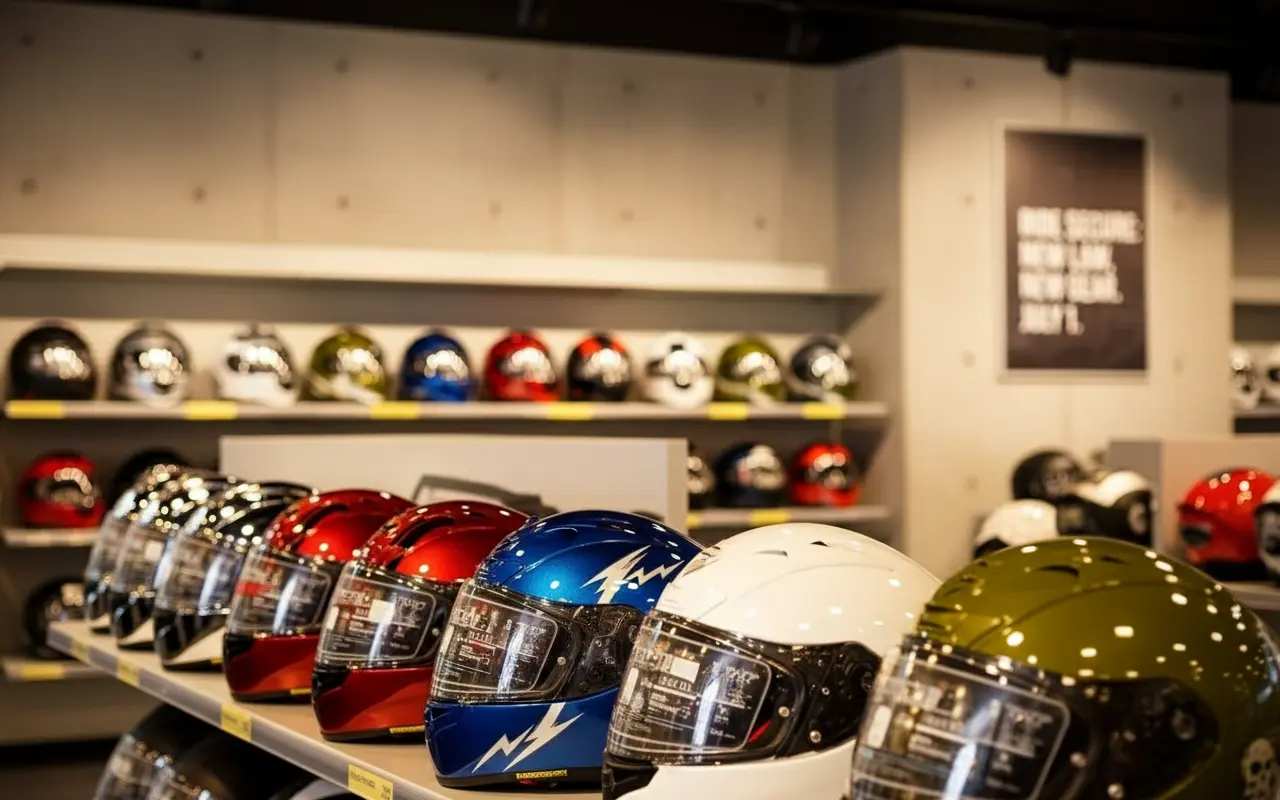
Just when you thought choosing a helmet couldn’t get any trickier, Europe is about to raise the bar on biker safety. Starting July 1, a new regulation comes into effect—and for motorcyclists across the continent, it’s not just a matter of swapping labels. The jump from ECE 22.05 to ECE 22.06 isn’t just bureaucratic alphabet soup; it means your helmet will have to do a lot more to keep your head in one piece (and keep you legal on the road).
Out with the Old: What ECE 22.05 Used to Mean
If you’ve been riding with a helmet bearing the classic white label with an “E” (for Europe, not “Excellent!”), congrats—you’ve been certified under ECE 22.05, the standard reigning since 2007. The rules were crystal clear, too:
- The helmet needed that white “E” label, followed by a number showing where it was approved.
- Four reflective strips were mandatory—front, back, and both sides—helping night drivers spot you before it’s a close encounter of the unkind kind.
- The chin strap? Had to meet strict resistance standards. No flimsy threads here.
But it wasn’t just about looking good in the parking lot. Helmets underwent shock tests: they had to survive collisions against two anvils at 27 km/h, then survive a dramatic drop from three meters—around 7.5 meters per second. Anyone caught cruising with an uncertified helmet was risking more than just helmet hair: a 90-euro fine and a three-point penalty on their license, courtesy of article R431-1 of the Highway Code. Ouch.
The Big Leap: What ECE 22.06 Changes
So, what’s actually new—and should you start panicking, or shopping? The ECE 22.06 standard keeps a lot of the stuff you know:
- The trusty label stays. No leafing through pages of fine print, thank goodness.
- The reflective strips and those tough chin straps are still non-negotiable.
But here’s where things ramp up faster than you can say “full throttle.” Helmets are about to face much tougher tests. Eric Thiollier, President of the Fédération française des motards en colère (French Federation of Angry Bikers—yes, it’s a real and perfectly reasonable organization!), puts it simply: “The tests will be more realistic and comprehensive.” That’s not just a PR line.
- Now, helmets must survive not one, but three impacts at different speeds.
- A whopping 18 impact points will be tested—up from six in the old days. Talk about thorough!
- Helmets will now be projected at speeds of up to 215 km/h to make sure they can really go the distance should the unthinkable happen.
- The visor’s resilience will be checked too, with specific tests for impact and scratches. Because seeing where you’re going is just as important as keeping your head safe.
- Advanced gadgets are coming into play: an internal sensor will measure abrasion resistance with greater accuracy.
In essence: helmets are about to become superheroes, minus the cape.
The Question of Price: Will Safer Mean Pricier?
All these extra technological wizardries and complicated testing—there’s no sugarcoating it—can push up costs. Will helmets become luxury items? The price of certification is expected to rise, and some of those extra costs may slide onto the shop shelves. But, as Eric Thiollier points out, “it shouldn’t be used as an excuse to wildly increase prices on helmets with the old certification.”
So, while your helmet could get a little more expensive, don’t expect to have to trade in your ride for a designer brain bucket just yet.
Current Helmets: Should You Panic or Chill?
Let’s cut to the chase for every biker clutching their ECE 22.05 helmet with a nervous sweat: you can keep using it after July 1, no drama. Not only that, shops can continue selling them right up until December 31, 2023. From January 1, 2024, the sale of new ECE 22.05 helmets will be prohibited in stores, but—good news!—you’ll still be allowed to wear yours on the road.
The transition to ECE 22.06 is meant to be gradual, not a mad scramble to empty your wallet. The aim? Raising the safety bar, not punishing riders who already invested in quality gear. So rest easy: your current helmet isn’t suddenly illegal or obsolete. But when it comes time for an upgrade, expect tougher helmets built to better protect what matters most.
Bottom line: ECE 22.06 will make helmets tougher, smarter, and ultimately safer without forcing you to rush out for a new one. Take your time, ride safely, and gear up for a future where your head gets top-notch protection—because you only get one!

Iveta is an aspiring journalist with a passion for storytelling and a deep love for coffee. Always curious and creative, she dreams of sharing stories that inspire, inform, and connect people around the world


