
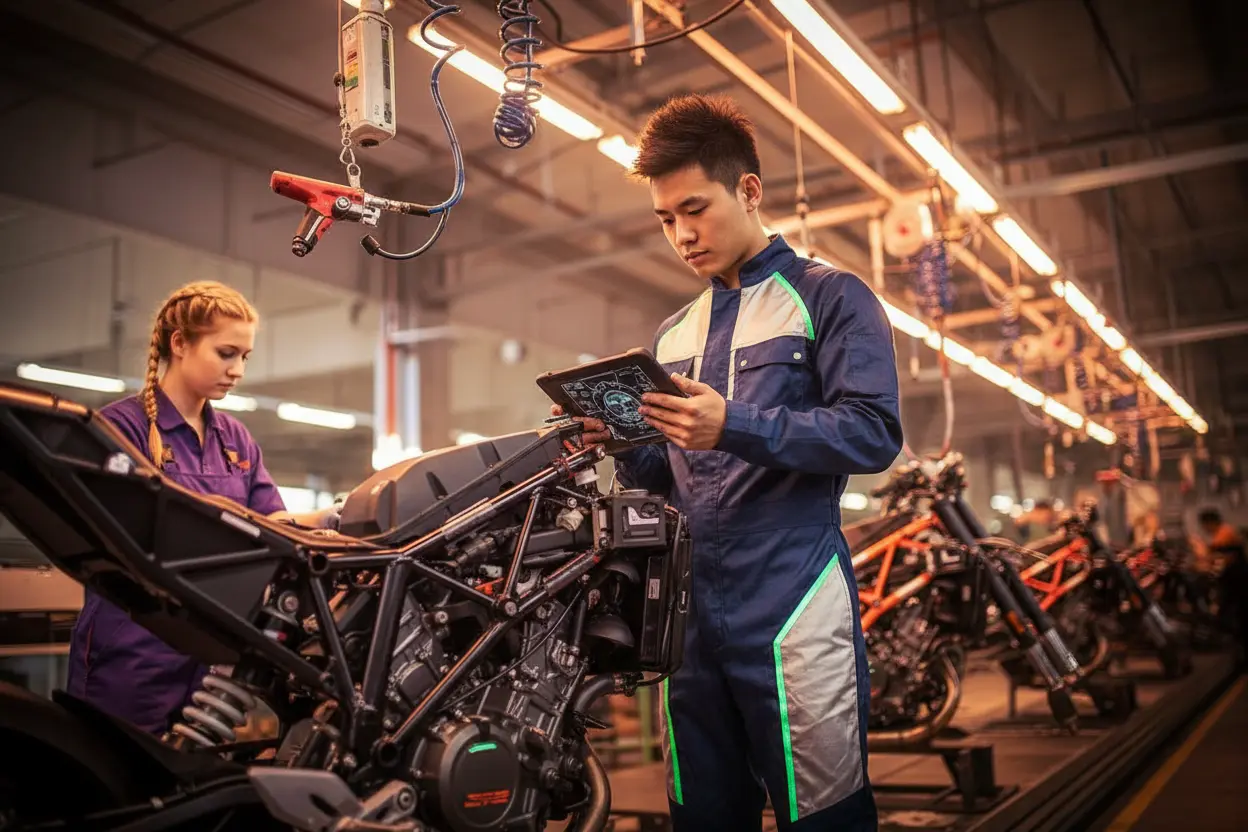
If you’ve ever swung a leg over a KTM, you know it’s not just about horsepower – it’s about heritage, grit, and a dash of European flair. Yet, for motorcyclists everywhere, a seismic shift is underway. Pierer Mobility Group, KTM’s guardian and the force behind GasGas, Husqvarna, and now MV Agusta, is moving big chunks of production from Austria to China and India. For some bikers, this feels like swapping schnitzel for spring rolls overnight. Is the thrill of riding about to get a reality check?
Pierer Mobility Hits the Throttle on Change
2023 started on a high note for Pierer Mobility Group, with sales jumping by 16.5% in the year’s first half. Instead of resting on their laurels, the group doubled down, concentrating resources on their core brands—KTM, GasGas, Husqvarna, and MV Agusta. Meanwhile, they waved goodbye to bicycle brands R Raymon and Felt, making it clear: the focus is motorcycles, pure and simple.
But there’s more than a boardroom shuffle happening here. This is a tangible production makeover. Pierer Mobility is shifting considerable production from the brand’s Austrian heartland to China, in partnership with CFMoto, and to India, where Bajaj is deep in the mix. It’s not just about cutting costs; it’s rewriting the playbook for global motorcycle manufacturing.
From Austria to China: Concerns and Realities
Transferring production to China, underpinned by an established collaboration with CFMoto, marks a new era for KTM. Not long ago, European and American riders raised skeptical eyebrows over « Made in China » motorcycles, dogged by doubts about quality. But the tide has shifted: Chinese manufacturers have proven themselves capable of delivering high-quality vehicles at lower costs.
For KTM, this production switch means more than just less expensive bikes rolling off the line. The move carves out a stronger foothold in rapidly expanding Asian markets—a land where demand for high-performing motorcycles is accelerating. Add in the cost edge, and you have a recipe for hotter global competition.
The India Play: Bigger, Cheaper, Faster
Let’s not forget the subcontinent. With Bajaj as KTM’s key Indian partner, mid-sized models like the 790 Duke and 790 Adventure are already rolling out of Indian factories. Lower labor costs—significantly less than in Europe—make these models leaner and meaner on price, which could mean more riders worldwide on orange machines. For KTM, establishing India as a production hub is less about nostalgia and more about numbers.
- Mid-size models such as 790 Duke and 790 Adventure produced in India
- Lower labor costs increase global competitiveness
- Bajaj partnership cements access to a vital market
Winners, Losers, and the Road Ahead
Of course, no revolution comes without a cost. The restructuring will save money, yes—but 300 jobs will be lost in Austria. While that’s a tough pill for the local workforce, Pierer Mobility insists it is supporting dealers and suppliers struggling with steep bank rates, thanks to its solid financial standing. So, not all is doom and gloom for those left in the lurch.
Looking into the crystal ball, Pierer Mobility is upbeat for 2024. The aim? Keep sales steady at 2023 levels and secure an EBIT margin between 5% and 7%. Achieving that demands cost-cutting—potentially tens of millions of euros worth. The transfer to CFMoto isn’t just about finances; it’s about leveraging opportunities where the appetite for performance bikes is surging.
And let’s shift gears to MV Agusta. Pierer Mobility underscores its importance and reassures Schiranna’s workers that the Italian icon has a bright future. The buzz over models like the new LXP Orioli with a 900cc triple engine supports their optimism. Looking ahead to 2026, KTM AG plans to become MV Agusta’s majority owner—a move expected to finally bury the brand’s financial uncertainties and broaden its global reach.
But the million-euro question remains: how will riders react? Will KTM’s gamble on China and India dilute its hard-won reputation, or deliver affordable, exhilarating bikes without skimping on quality? Success will depend on keeping standards sky-high while shaving euros off the sticker price. If done right, motorcyclists may just find themselves getting more bang for their buck—without trading away that pulse-quickening ride KTM is famous for.
In the end, the test will be in the first twist of the throttle: can a KTM made farther from the Alps still make your heart race? For now, the only way to know is to wait, watch, and—when the time comes—ride.

Iveta is an aspiring journalist with a passion for storytelling and a deep love for coffee. Always curious and creative, she dreams of sharing stories that inspire, inform, and connect people around the world


